


Please note that this is an Archived article and may contain content that is out of date. The use of she/her/hers pronouns in some articles is not intended to be exclusionary. Eating disorders can affect people of all genders, ages, races, religions, ethnicities, sexual orientations, body shapes, and weights.
By Quinn Nystrom, MS
March was Self-Harm Awareness Month, a time to bring understanding, compassion, and hope to those who may be struggling in silence.
Eating disorder recovery often involves facing the overlap of self-harm and eating disorders, behaviors that may appear different, but often stem from similar emotional pain. Recognizing these links helps us take steps toward meaningful healing.
More Than a Behavior: Looking Beneath the Surface
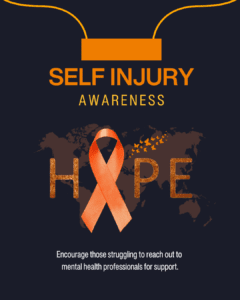 Eating disorders and self-harm are not simply ‘choices’ or ‘attention-seeking behaviors,’ but often coping strategies for overwhelming emotions, trauma, anxiety, shame, or numbness.
For some, restricting food, bingeing, purging, or compulsive exercise may serve as a way to regain a sense of control or quiet emotional distress.
Similarly, self-harm, such as cutting, burning, hitting, or other forms of intentional self-injury, is often used as a way to:
· Release intense emotional pain
· Cope with anxiety or panic
· Express feelings that feel impossible to put into words
· Interrupt emotional numbness
· Punish oneself
· Create a temporary sense of relief
Although these behaviors are harmful, they often develop as survival tools during times of deep emotional suffering.
That is why treatment must focus not only on stopping the behavior but also on understanding what it is trying to communicate.
Why These Conditions Often Co-Occur
Eating disorders and self-harm frequently coexist because they can stem from many of the same underlying struggles, including:
· Trauma or adverse life experiences
· Depression and anxiety
· Perfectionism
· Low self-worth
· Difficulty regulating emotions
· Feelings of shame or self-criticism
· a need for control during times of chaos
For some individuals, one behavior may begin first, and the other develops over time as distress escalates.
For example, a patient may initially use eating disorder behaviors to cope, but when those behaviors no longer provide the same relief, self-harm may emerge as an additional way to manage emotional pain.
Families often ask, “Why would someone already struggling with an eating disorder also hurt themselves?”
The answer often lies in a person’s attempt to survive feelings that seem unbearable, rather than in a desire to cause harm.
What Families Should Know
Learning that a loved one has both struggles can feel overwhelming for families.
It is natural to feel fear, confusion, sadness, or even guilt.
It is important to remember that these behaviors are signals of distress, not personal failures.
Approaching a loved one with curiosity and compassion, rather than anger or shame, can make a significant difference.
Helpful responses might sound like:
· “I’m here with you.”
· “You do not have to carry this alone.”
· “Help me understand what you’ve been feeling.”
· “I’m glad you told me.”
Judgment and punishment can increase secrecy. Compassion creates space for honesty and healing.
Healing Is Possible
Recovery is possible, even when multiple struggles are present.
Because eating disorders and self-harm share emotional roots, integrated treatment is essential. Effective care must address both behaviors and the pain behind them.
At Center for Change, we understand the complexity of co-occurring eating disorders and self-harm. Our treatment approach is designed to help patients build safer coping strategies, process underlying pain, and develop the tools needed for long-term healing.
No one should have to navigate this alone.
Self-Harm Awareness Month reminds us that behind every behavior is a person who deserves understanding, support, and hope.
Remember: Recovery requires understanding both behaviors and the pain beneath.
Compassionate, integrated support from families and professionals is essential. With help and empathy, healing is possible for those struggling with eating disorders and self-harm.
 Call Us Today


